 ClientProof
Decision path
Choose ClientProof if...
- You want clients to see updates, files, and approvals in one link.
- You need faster signoffs with less recap messaging.
- You care about professional delivery visibility without login friction.
A Google Drive alternative for client delivery should do more than store and share files — it should provide delivery context, project status visibility, and a professional client experience that Drive was not built to offer. ClientProof combines file sharing with project milestones, status updates, and approval workflows in one no-login client page.
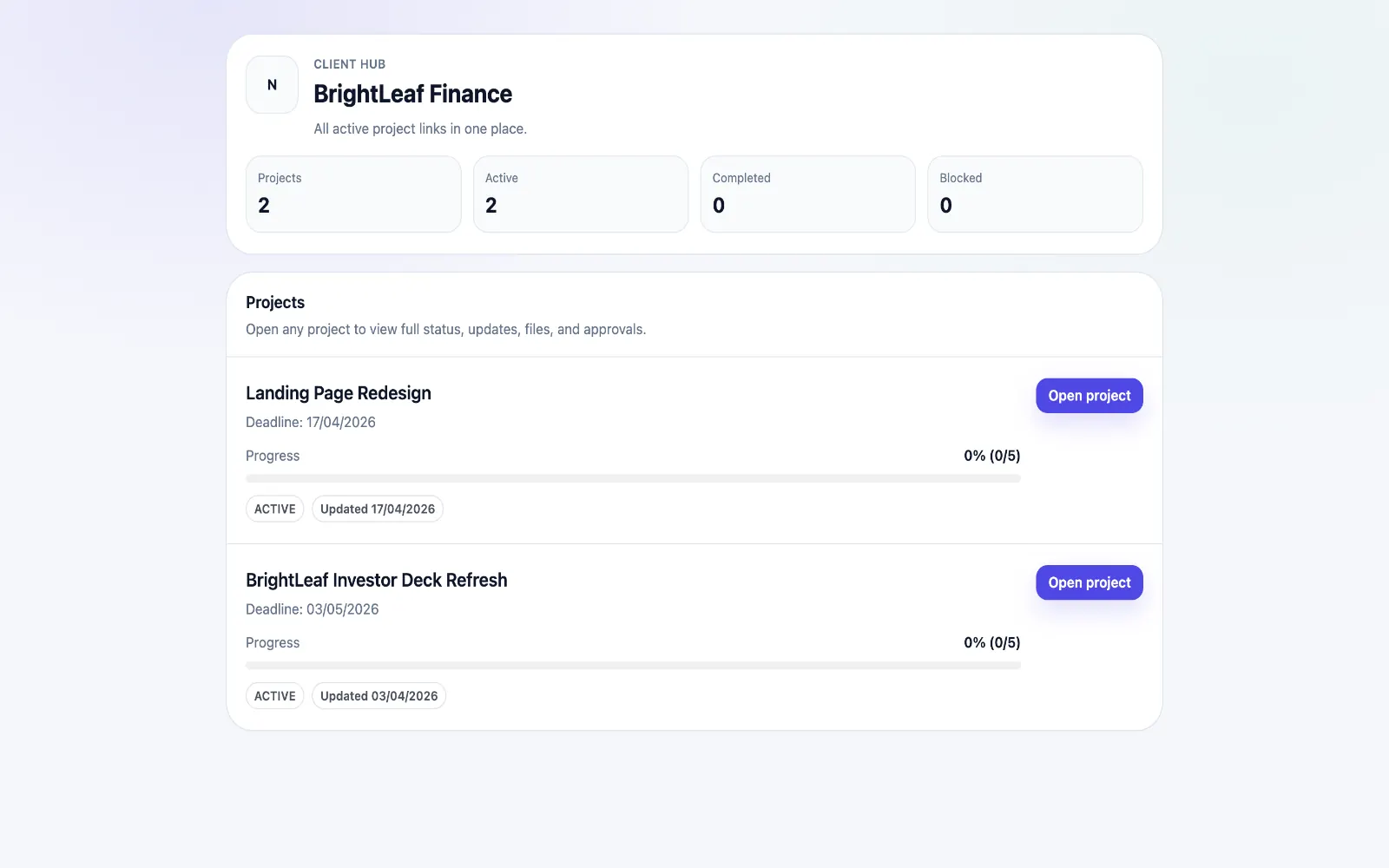
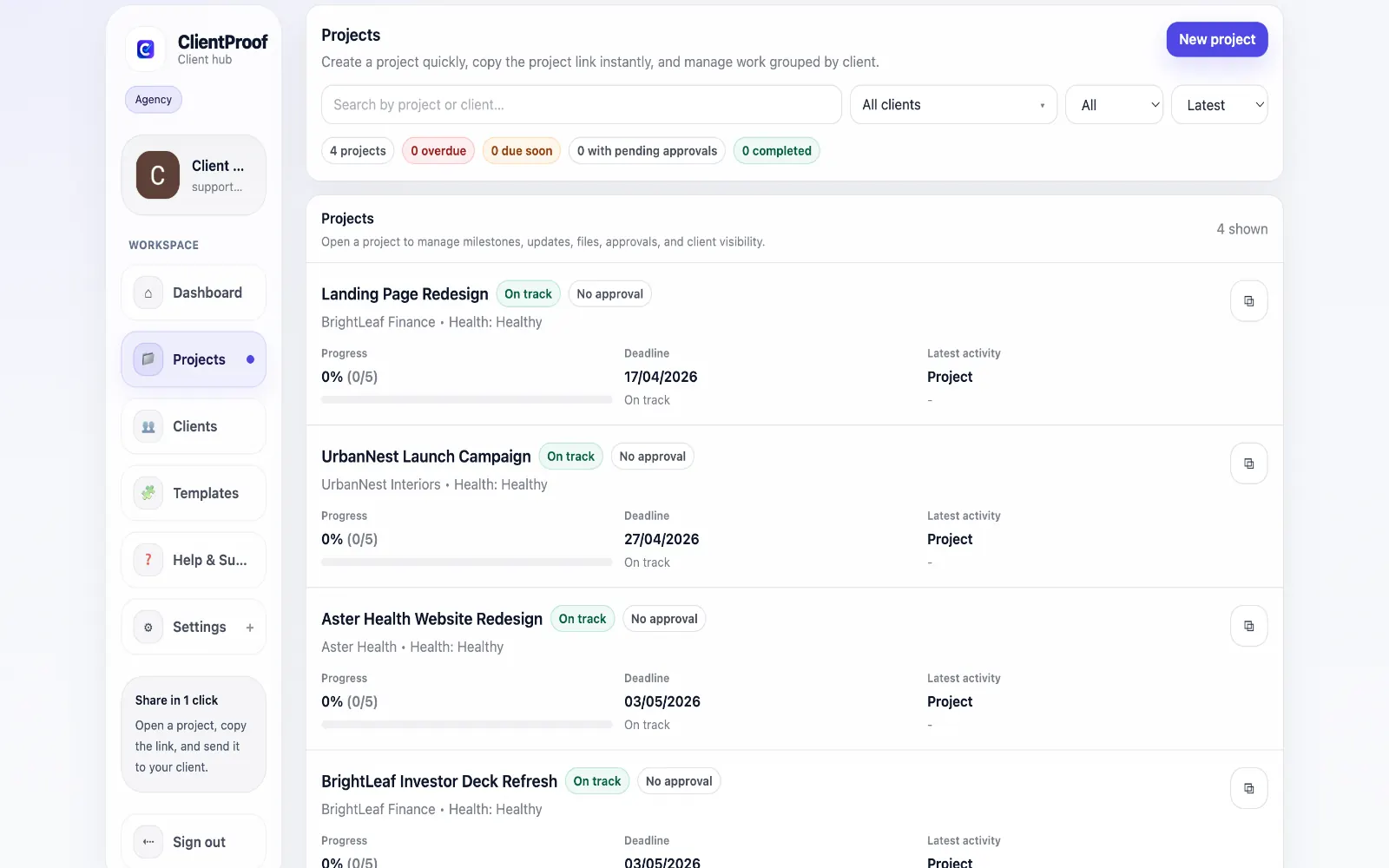
Google Drive is used by nearly every freelancer and agency, and it is excellent at what it was designed for — storing, syncing, and sharing files with team members. The problem emerges when it is used as a client-facing delivery tool. Clients navigating a shared Drive folder face an experience that communicates raw infrastructure rather than professional delivery. They see a file browser with no project context, no indication of what is new versus what has been there for months, no clarity about what needs their review, and no obvious way to provide sign-off. A proper Google Drive alternative for client work wraps file delivery in a professional presentation layer. Files are organized by project milestone, not alphabetically in a folder. Each file is accompanied by context — what it is, when it was added, what the current status is. Approval requests are explicit rather than implied by a shared folder link.
Teams usually adopt this workflow to reduce repeated recap messages, avoid tool-switching confusion, and give clients one clear destination for updates, files, and decisions.
Use this matrix to evaluate whether ClientProof fits your client-delivery workflow better than alternatives.
| Feature | ClientProof | Alternative |
|---|---|---|
| No-login client access | Yes | Varies by tool |
| Status + files in one client view | Built-in | Often split across tools |
| Client approval clarity | Structured | Commonly scattered |
| Setup speed for first project | Fast | Can require extra configuration |
| Best fit | Freelancers and agencies focused on delivery visibility | Other tools |
| Winner | Best for client-facing delivery clarity | Best for broader or internal workflows |
List current friction points in your existing tool stack.
Pilot one project in a delivery-first client page format.
Compare clarity, approval speed, and follow-up volume.
Adopt the workflow that produces cleaner client outcomes.
Drive is optimized for internal team collaboration, not for presenting work professionally to clients. It provides no project context, no milestone visibility, no approval workflow, and a folder navigation experience that communicates raw storage rather than professional delivery. A dedicated delivery tool creates a meaningfully better client impression.
Yes. Many teams store master files in Drive and attach delivery copies to ClientProof project milestones. The tools serve complementary roles — Drive as your internal file system, ClientProof as your client-facing delivery layer.
Yes. The most common reason clients cannot find files is that shared Drive folders lack organizational context. In ClientProof, files are attached to specific project milestones with titles and notes, so clients always know which file belongs to which stage and which is the current version.
Common alternatives include Dropbox (similar file browser experience, no project context), WeTransfer Pro (one-off transfers, no persistent project page), Notion (internal tool repurposed for clients, learning curve), and ClientProof (purpose-built client delivery with no-login access). The right choice depends on whether you need only file sharing or a complete delivery experience.
Start free forever and share one clean client link for updates, files, and approvals.