 ClientProof
Decision path
Choose ClientProof if...
- You want clients to see updates, files, and approvals in one link.
- You need faster signoffs with less recap messaging.
- You care about professional delivery visibility without login friction.
ClientProof vs Google Drive depends on whether you need only file storage or a full client delivery experience.
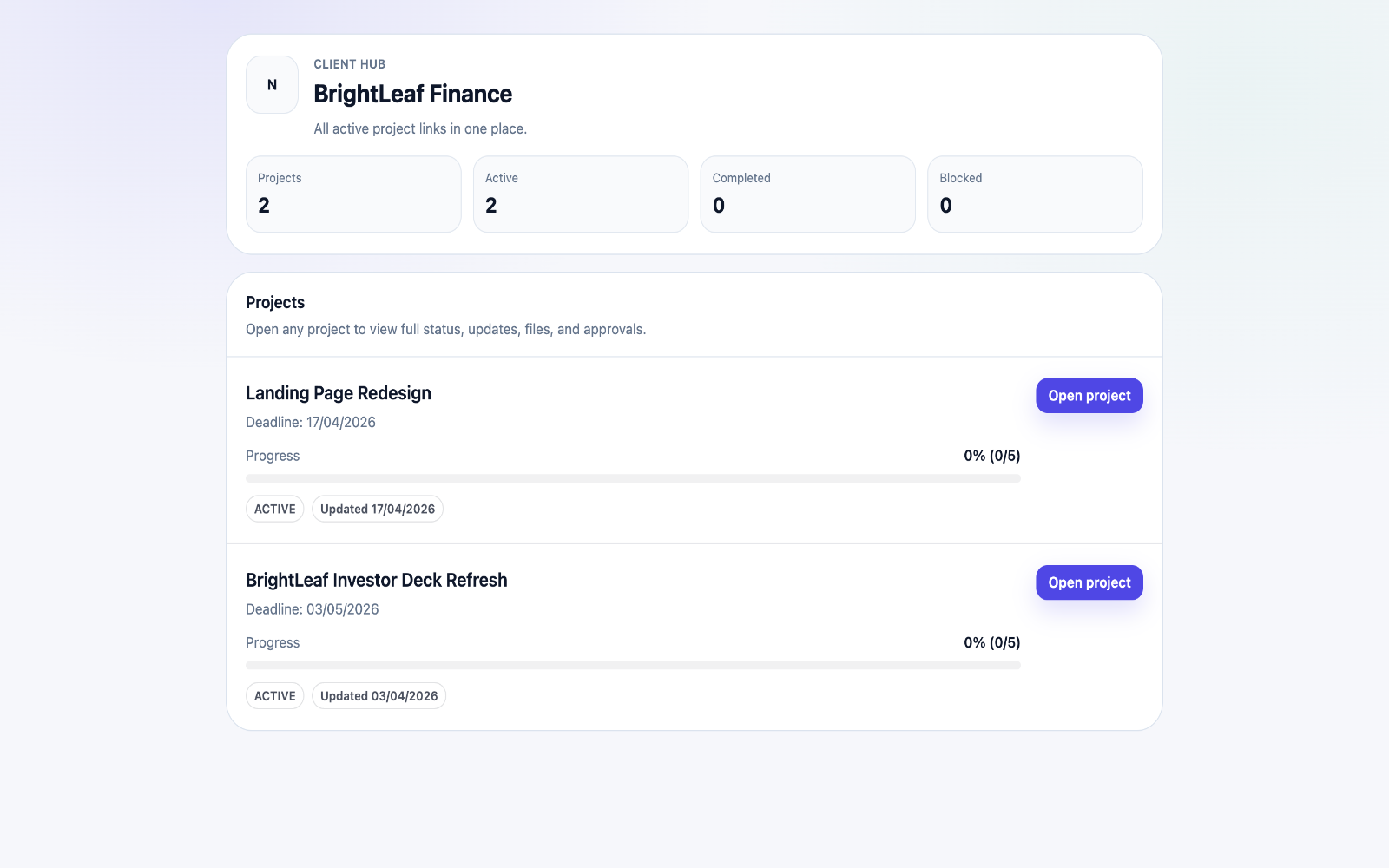

Google Drive is strong for storage, while ClientProof combines file sharing with project updates and approvals.
Teams usually adopt this workflow to reduce repeated recap messages, avoid tool-switching confusion, and give clients one clear destination for updates, files, and decisions.
Use this matrix to evaluate whether ClientProof fits your client-delivery workflow better than alternatives.
| Feature | ClientProof | Alternative |
|---|---|---|
| No-login client access | Yes | Usually limited or indirect |
| Status + files in one client view | Built-in | Often split across tools |
| Client approval clarity | Structured | Commonly scattered |
| Setup speed for first project | Fast | Can require extra configuration |
| Best fit | Freelancers and agencies focused on delivery visibility | Google Drive for Client Delivery |
| Winner | Best for client-facing delivery clarity | Best for broader or internal workflows |
Review your current client delivery process and communication gaps.
Compare no-login access, status visibility, and approval workflows.
Pilot one active project with a delivery-first page structure.
Adopt the tool that reduces recap messages and improves approval speed.
It works for storage, but status and approval communication often stays fragmented.
Yes. File sharing is included alongside updates and approvals.
ClientProof is better when clients need clear progress visibility.
Start your 14-day trial and share one clean client link for updates, files, and approvals.